The Flood Tablet held at the British Museum in London
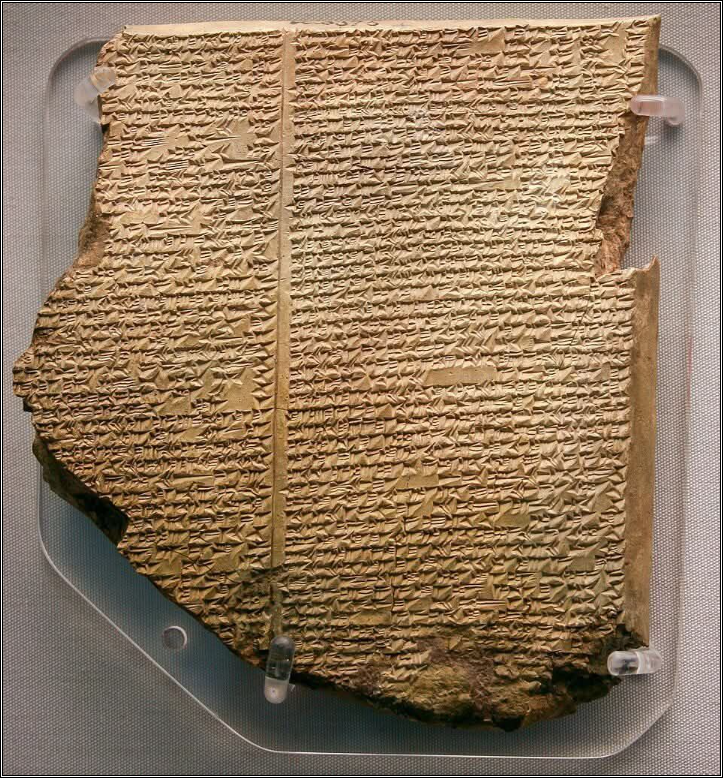
In 1872, a young researcher named George Smith sat in the board reading hall of the British Museum, and read the boards that had arrived in London from an excavation site near the city of Mosul in Iraq (Old Nineveh). On the site they discovered blackboards, for days it turned out that they were part of the private library of Ashurbanifel, king of Assur. Among the tablets, Smith found a textual discovery that has disrupted traditional biblical study so far, revealing a link between the Bible and ancient Eastern cultures. The board he read and deconstructed was board number 11 of the Gilgamesh stories, also known as "the board of the flood". The discovery of the slab and deconstructed a dawn for ancient sopotam texts written centuries before the Bible appeared on the scribble. It turned out that the board was part of a wide 11-board epic story known as the "Gilgamesh Plots". The author of Apus Shav from different conservative sources, and edited them into one organic creation. Gilgamesh was a tyrant king in the city of Oruch - the longest city of the biblical: "And you shall be the head of his kingdom Babel, and long and strong, and all, in the land of the youth." " (Genesis X, I). In order to ease the people of his city, the gods helped against him in the name of Enchid, a wild creature doubtful human, living in the prairie. When Enchido arrives in the city and meets in Gilgamesh, the two become friends in heart and soul and decide to make their name famous in the world through a journey to Lebanon’s Holy Cedar Forest in order to carve down a huge cedar tree to build a door to the temple of El Anlil, the King of Gods. From there the plot gets complicated. The stories of Gilgamesh began to solidify in the ancient Babylonian period (1500-2000 B.C). The story has become popular, and copies of it have been found all over the former east in several languages including Ekdith, Hittit and Horit, and in some sites such as the city of Agorit in Syria, the city of Imar (on the banks of the Parat River), the city of Hatosha - the capital of Hittim in central Turkey, the city of Ashur and the city of Kalach (Nimrod), and a small fraction is also found near Tel Magido in Israel israel (! ) In the excavations carried out in Tel by the Oriental Institute of the University of Chicago. Since the decommissioning of the 11th board in the late 19th century, the Apus has been linked to the Bible, because of the story of the flood. Between the two versions - the one in the Gilgamesh story and the story of the flood in Genesis - there are similar elements: the hero saved from the flood, the description of the ark (or the vessel), the preparations to stay in the ark, the duration of the flood, the birds sent to find land, the landing on a mountain, and the sacrifice of the offering. However, the Babylonian story is much older than the biblical story, and therefore begs the question of what is the connection between them and when did the Bible ask - if at all - the mesopotamic story. This question is condemned in research, and does not have a clear answer. The story of the flood is not the only example of the influence of the biblical literature on the bible. For Gilgamesh stories, there is also an imagination for the Eden stories: the snake, the forest of trees in the Eden and so on. There are those who claim also to the imagination also among the words of wisdom in the Gilgamesh stories to the audience. However, there is no imagination to prove that the choir is from the Achadian epus, but it is possible to explore the common literary background and the proverbs of wisdom spread throughout the Old East. Pictured: The Flood Plaque - the eleventh plaque by Apus Gilgamesh depicting how the gods sent a flood on the world, and one of the most famous plaques of all the pendulum boards, on display at the British Museum in London.